Lifeguard Swim Shop Now
Showing posts with label Lifeguard. Show all posts

Friday, November 20, 2015

Caring for Rashguards


Just like other items of clothing, we simply think of setting a rashguard aside to get washed with other articles of clothing. It’s often left in a wet, bundled mess and then tossed in the laundry with other clothes. This is NOT how you want to take care of your swim gear. If you want to preserve the life of your rashguards, it needs to be properly washed and cared for.

When you are washing your rashguard, be sure not to use hot water. Hot water can damage the material that rashguards are made out of, resulting in a shorter life span. As a matter of fact, it’s best if you wash your rashguards by hand in cold water. When it’s time to dry your rashguards, never put them in the dryer. It’s recommended to turn your rashguard inside out and let them hang dry away from direct sun or heat.

When your rashguard is dry, it’s time to put it away until your next use. Refrain from using a cheap wire hanger, and opt for a padded hanger instead. In hopes to not weaken the fabric, rashguards should not be folded.


If you want to get the most out of your rashguards, taking proper maintenance can significantly increase its life. By following the tips above, your rashguard will still look new months after it’s been used.

Thursday, July 16, 2015

Open Water vs Controlled Water


If you have experience as a lifeguard, you know that you’re primary job is to prevent injuries. No matter where you are working, this always stays constant. However, depending on where you are employed some things may differ from job to job. For example, think of the differences between working at a community pool versus a beach! 

Typically at community pools or water parks, the lifeguard is positioned very close to the water in a lifeguard chair. This allows them to be up close to the action, able to intervene if needed. In this setting, lifeguards typically change stations every so often. Usually these lifeguards are also responsible for the general cleanliness of the pool and checking the chemicals. Lifeguards that work at a beach or a lake have completely different responsibilities. The water is usually much deeper and much bigger than that of a pool. There may even be swimming devices in the water like surfboards, floats, etc. Depending on the area, some lifeguards may even be stationed into the water on floating stations so they can be closer to the action. 

Since lifeguards in open water have different settings, they also need to have different equipment. Could you imagine trying to help someone that is out further than you can touch with waves coming in? In this scenario, a lifeguard may try using a rescue can rather than a rescue tube. This is because rescue tubes are not designed to face rough water conditions. In addition, jet skis, boats, and kayaks may be used to save those far into the water! In many cases, these individuals will not be within reach to use a pole or hook to save a struggling patron. Sometimes those in open water use rescue boards which fit multiple individuals if needed.

The common accidents that occur in community pools and parks are due to horseplay both in and out of the pool. This can range from children laughing and joking in the pool to running near the pool. Lifeguards guarding a lake or beach on the other hand have other obstacles to face to protect swimmers. Beaches and lakes typically have fish and seaweed that can cause threats as well as sharks or jellyfish! Lifeguards will need to know how to cure and treat any injury due to the marine life. As stated before, open water is much rougher than community pools. Waves are constantly rolling in as well as rip currents with no OFF switch. Individuals can be pushed underwater leaving the lifeguard to react very quickly! 

As you can see, there is no set task when you are a lifeguard. Many things can happen in a split second and it’s your responsibility to act accordingly. There are many distinct differences depending on where you lifeguard, so make sure you know the differences and the responsibilities for wherever you choose to work. 

Tuesday, June 23, 2015

Diving Safety Tips

The nice weather has finally arrived and the pools will be open soon! You will be keeping cool and staying active in no time. Swimming and diving are favorite summer activities for both adults and children; however, there is also the risk of injury.


According to the ThinkFirst National Injury Prevention Foundation:

  • As many as 1,000 spinal cord injuries occur each year due to shallow water diving
  • Ninety percent of all diving injuries cause a spinal cord injury which results in paralysis
  • Most injuries occur to males aged 15-25 years
  • Most injuries occur while diving into six feet of water or less
  • Three out of four injuries occur in lakes, rivers, oceans and other natural bodies of water


Tips:

First and foremost, before you dive into any depth of water - be sure to jump feet first the first time. This allows you to familiarize yourself with the waters. The recommended depth to dive from the side of a pool is 11 feet, while the recommended depth for diving from a diving board is 12 feet. If you are diving from a diving board, dive straight from the board and not from the sides. It is not advised to dive from various structures, such as ladders, slides, fences, etc. As always, follow posted water safety rules and always supervise children while diving and swimming.


A majority of pool-related spinal cord injuries result in paralysis of all four limbs.


Suspected Injury

If there is a suspected injury in water, call 911 immediately. Because the victim could be in pain and/or shock, approach the victim carefully. If they are not on their back, carefully hold the victim's head in alignment with his or her back and gently turn him or her onto his back. It's imperative to keep their head and back stabilized. Do not remove the victim from the water until EMS arrives.

The Lifeguard Store has all of your spinal equipment needs.

Friday, June 5, 2015

Dealing with Skin Chafing


What is it?
Chafing is when there is repetitive contact by another body part or material which leaves raw lesions on the body. In severe cases, this friction can even cause bleeding. Skin chafing can occur in a variety of places such as thighs, groin, and underarms.  


Prevention
When swimming, it is vital to have the proper fitting suit. With so many options to choose from, searching for the perfect suit may seem overwhelming. Not everyone is built the same and require different styles, which is why there are so many on the market. Be sure to check out our FemaleSwimsuit Back Style Info-graphic so you know the difference.

In addition to a good fitting suit, you can also use anti-chafing products such as TriSlide. This liquid silicone based spray is safe for suits and is even water resistant. Because everyone is built differently, chafing will occur in different locations on different people. Over time you will familiarize yourself with the areas in which are prone to chafing. In the meantime, you can never over-lubricate potential chafing places.


Care
If you happen to get an open sore, simply treat it as any other sore. It’s important to keep it clean and dry in order for it to heal properly. For optimal healing, be sure to use ointment as well. If it is causing you pain, you can use over-the-counter pain relievers if desired. For severe sores and wounds, see a doctor.

Friday, March 20, 2015

Protecting your Suit

Your suit can take quite the beating during the summer, after wearing it day in and day out. You may think that staying out of the pool will help, but that’s not true. It’s not just chlorine that can affect the lifetime of your suit, but also UV rays. As you know UV rays can be harmful to your skin, they can do damage to your clothing too. If you have ever left clothing in your car or outside in direct sunlight for a while, you noticed that the color faded. In addition to this, chemicals from sunscreen, tanning oils and deodorant can affect the life of your swimsuit as well. 


By rinsing your suit with water first, it will not absorb as much oil or lotion.


Is your favorite swim suit no longer that bright, radiant color it once was? Is the elasticity been shot? If this happens to your recreational swimsuit, just think what will happen to your competitive suit which costs double to triple the amount! There is a solution for that! Swimwear Protector!


This product help protect swimwear from both chlorine and UV damage. It helps preserve the color and elasticity too. All you need to do is add two capfuls and your suit into water and the chlorine will be neutralized! Just soak, swirl, and let it dry! It’s a good idea to not dry your swim suit in the dryer, as they get to extreme high temperatures which can break down the material.

Thursday, July 24, 2014

Lifeguard Apparel: The Basics

As a lifeguard, you have a very important role - saving lives. When there is an issue or someone has a question, you are the person people are looking for. With this said, you want to be seen! This is why wearing Guard Apparel is important in order for you to do your job. 

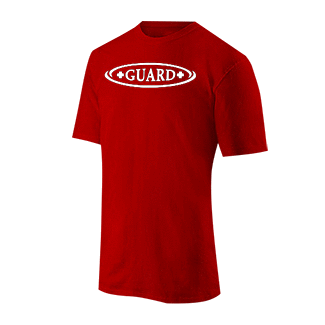
Depending on your location, your summers can be hot one day and cool the next. If this is the case, you want to dress in layers that can easily be taken off in case of an emergency. We sell a variety of Guard Apparel to suit the temperature changes in your area! Check out our RISE Guard Hoodie and our RISE Guard Tee. We also carry sweatpants, jackets, rashguards, and more!


Don't stop with just apparel, you need accessories too! With the sun blazing on you day in and day out, you need something to protect your face and eyes from the sun! We offer many visors and hats in a variety of colors ranging from red to khaki. We also offer many different styles of sunglasses with polarized lenses that offer UV protection.


The Lifeguard Store offers the best quality at the best price.


Wednesday, July 16, 2014

Best Way to Burn Fat


You can’t spot reduce a certain area, you can’t overwork an area to tighten it, and you can’t wish it away! What are we talking about?? FAT! If you are continuously looking for the best ways to burn fat, we have a secret! It’s HIIT! Also known as High Intensity Interval Training. If you haven’t tried it yet, you must! 

HIIT can be done in various ways, one of the most popular being sprints. If you aren’t a long distance runner, steady-state cardio can be such a dread! It can be very boring, time-consuming, and not as effective as it should be. This is due to your body adapting. If you keep running at the same speed and time for a while, your body isn’t going to be working as hard. It’s very important to keep your body guessing!

Although HIIT is commonly referred to with sprints, it is the same concept for many different activities. This involves a series of ‘intervals’ at which you should be giving 80-90% intensity, followed by a rest period. I know you may be thinking it may be intense, but that’s the point! When you are finished with cardio in 20 minutes rather than an hour – you’ll thank me! 

Concept:

           Warm-Up: 3-5 minutes
           –––––––––––––––––
80-90% Intensity: 30 seconds
                      Rest: 30 seconds
         –––– Repeat 10x ––––
            Cool-Down: 3-5 minutes


If you are unable to go the full 80-90% intensity, or you need longer than 30 seconds to rest – It’s OKAY! It will take some time to get used to, but you will see results. Do what works for you and just remember to keep pushing yourself.

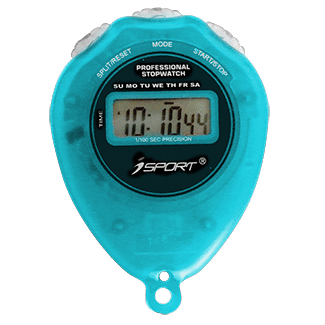
If you don't have a stopwatch, you will probably want one for HIIT! Check out our MAO Elite Meet Stopwatch!
 
Are sprints not your thing? We know swimming is – so what are you waiting for? Hop in the pool! This also can be done on an elliptical, bicycle, stair master, sled drags, and more!